

Road salt is a fact of life up here. From January through March, every car in Dutchess, Orange, Ulster, and the surrounding counties takes a beating. White crust building up in the wheel wells, brake dust caking onto rims, tar flicking up from Route 9 and I-84. By April, the parking lots at detailing shops start filling up fast.
This guide breaks down the actual landscape of auto detailing in the Hudson Valley, NY. Which shops operate where, what services they offer and at what prices, what a real detail involves step by step, and what it takes to start a business doing this work. The data below reflects the market as of mid-2026.
What Services Actually Cost?
Prices across the valley vary more by county than by shop size. Westchester runs higher than Columbia or Greene. Here’s a working range for a mid-size sedan in mid-2026:
| Service | Price Range |
| Exterior Wash and Wax | $30 to $50 |
| Basic Detail (wash, interior vacuum, wax) | $150 to $200 |
| Full Detail (deep interior and exterior) | $250 to $400 |
| Paint Correction with Sealer | $400 to $800+ |
| Ceramic Coating (professional application) | $800 to $2,500 |
| Engine Bay Cleaning (add-on) | $50 to $100 |
| Headlight Restoration (per pair) | $50 to $150 |
The $350 that 33 Detailing charges for a full detail on a car is about the median for independent operators doing thorough work. Hambletonian’s $60 express detail is a different product entirely: fast, light, and conveyor-assisted.
What a Real Detail Involves?
A full detail is not a car wash with extra steps. Here’s the actual sequence professionals follow:
Wheels first
We need to clean the wheels first because they collect the most brake dust and grime. A safe alloy wheel cleaner is applied. Brushes clean the spokes and lug nuts, and then everything is rinsed off. Doing this last would just splash contamination back onto a clean car.
Pre-wash
A pre-cleaner goes on the lower body panels where bugs and tar concentrate. Some shops use a foam cannon to blanket the whole car in soap and let it sit for five to ten minutes. It breaks down the road grime without touching the surface.
Two-bucket wash
One bucket holds soapy water, and the other holds clean rinse water. The wash mitt goes into the soap bucket, wipes a section of the car, then rinses in the clean bucket before going back for more soap. The purpose is straightforward. You are not dragging grit from one panel back across the paint. Top to bottom, methodically.
Drying
Microfiber towels and sometimes an air blower. Door jambs and body gaps get attention here. Trapped water causes spots.
Decontamination
Even after washing, paint can feel gritty. An iron fallout remover (it turns purple as it reacts with brake dust) gets sprayed on and left to dwell. A clay bar or clay mitt gets worked across the surface. It is lubricated with a spray detailer to pull out anything the wash did not reach. The result is paint that feels genuinely smooth.
Paint correction
This is optional and depends on the car’s condition. Swirl marks from improper washing, light scratches in the clear coat, oxidation on older paint. These get addressed with a machine polisher. Shops use dual-action orbital polishers (the Adam’s Swirl Killer and Griot’s G9 are common choices) for safer, more forgiving cutting. A rotary buffer removes defects faster but takes more skill. Polishing happens panel by panel, starting at the top, working down.
Protection
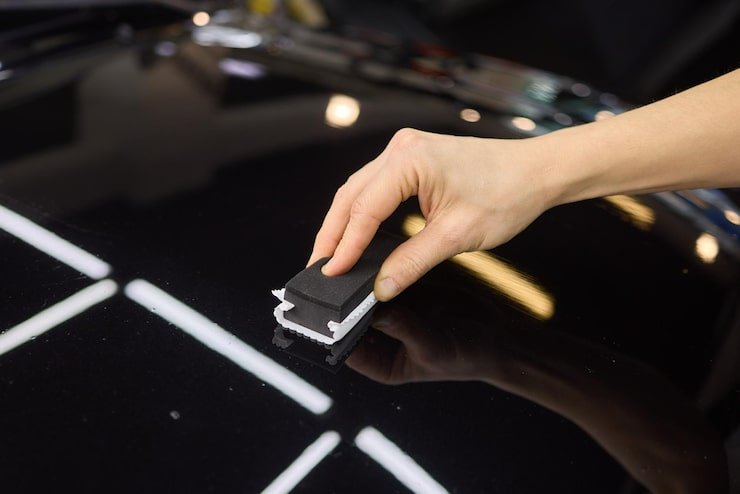
A protective layer shields the paint of your car from UV rays and other things. It reduces fading and minor damage while adding a glossy finish. The layer also makes cleaning easier because it prevents dirt from sticking. You can maintain the car’s charm and extend paint life with a little bit of care.
Interior
The interior is thoroughly cleaned and refreshed. Remove the mats, and all surfaces are vacuumed. Seats and carpets receive deep cleaning to remove stains and dirt. Leather surfaces are cleaned and conditioned for protection. The dashboard and windows are cleaned. All this leaves the interior fresh and spotless.
The Environmental Rules Mobile Detailers Navigate
Anyone running a vehicle service outdoors in New York needs to understand the water rules. Auto detailing in the Hudson Valley, NY comes with state-level restrictions that most customers never think about. New York State prohibits discharge of car wash wastewater to storm drains, rivers, or groundwater. Soapy rinse water contains oil, heavy metals from brake dust, and phosphates. Running it down the driveway and into the street is an NYSDEC violation.
Mobile detailers handle this a few ways. Some use containment mats under the vehicle that collect runoff. Some capture water in onboard tanks and haul it to an approved disposal site. Some arrange discharge to a municipal sanitary sewer, which requires county approval. In Westchester, that means NYSDEC SPDES coverage and sign-off from the county Department of Environmental Facilities.
The practical upshot: if you’re hiring a mobile detailer and they’re washing your car on the street in front of your house, ask how they’re handling the water. Shops using biodegradable, phosphate-free soaps reduce the problem but don’t eliminate it. Chemical disposal also falls under NY DEC rules. Degreasers used in engine bay cleaning, for instance, can’t just go down the drain.
Seasonal Patterns in the Valley
Detailing shops in this region run hot in spring and fall, slow in winter, and steady in summer. The seasonal rhythm of auto detailing in the Hudson Valley, NY follows the same pattern year after year, driven by road salt, pollen, and the instinct to prepare for the next season.
March through May is the busiest stretch. Winter salt and grime drive a wave of customers who want their cars cleaned and protected before summer. Shops that do paint correction and ceramic coatings book weeks out during April. This is when to schedule early or expect to wait.
June through August stays steady. Bugs accumulate on front bumpers and hoods. UV exposure matters for paint protection. Convertible owners are active. Demand does not spike, but it holds.
September through November is the second peak. Leaf residue, early road salt, and the instinct to prep for winter bring people in for sealants and full details. Shops offering winter protection packages (sealants, undercarriage rinse, ceramic top-ups) see good volume.
December through February slows sharply. Mobile detailers in particular may limit operations during cold and snow. Some shops shift to interior-only services: odor removal and carpet shampooing, to keep volume up.
The general recommendation for Northeast drivers
A full detail twice a year, aligned with spring and fall, with quick interior cleanings or maintenance washes in between. Heavy users (people with dogs in the car, long commutes, or kids who eat in the back seat) should go every two to three months.
Starting a Detailing Business Here
The market for auto detailing in the Hudson Valley, NY supports independent operators, particularly mobile ones. Startup costs are lower than most service businesses, and demand is distributed enough that a solo operator can build a client base across several towns.
Legal structure
Most small detailers register as LLCs. New York State requires a Certificate of Authority for sales tax collection on services. Hudson Valley counties don’t require a car wash license (that’s a New York City rule), but check local zoning if you plan to operate from a home address.
Insurance
General liability is non-negotiable for any work done on someone else’s vehicle. A paint polishing error, a tool dropped on a hood: these things happen. Commercial auto insurance covers the van. If you hire technicians, workers’ compensation is required under NY law.
Equipment
The core kit for a mobile operation:
- Pressure washer: 1,800 to 2,100 PSI is the working range. The Craftsman CMEPW2100 (2,100 PSI, 1.2 GPM) performs well; the Ryobi 1,900 PSI is a lighter option.
- Dual-action polisher: Adam’s Swirl Killer or Griot’s G9 are the standard choices for shops that prioritize safety and quality. Rotary buffers are faster but demand more experience.
- Wet/dry vacuum or extractor: A 3- to 6-gallon shop vac handles basic work; a dedicated carpet extractor does a better job on saturated fabric.
- Generator: Required for mobile work if the customer’s property doesn’t supply power access.
- Chemicals and consumables: Estimate $15 to $20 per vehicle in chemical costs: shampoos, waxes, clay bars, interior cleaners, towels amortized over their useful life.
Full mobile setup (generator, large pressure washer, professional polisher, compressor, full chemical inventory) runs $5,000 to $15,000. Entry-level gear for a part-time starter is closer to $500.
Pricing and revenue
At $250 per full detail and two cars per day, five days a week, the gross is roughly $120,000 annually. Supply costs at $20 per car across 480 cars run $9,600. After insurance, fuel, phone, and marketing, a solo operator carrying no labor cost can clear $60,000 to $70,000 net. That tracks with industry margins; independent detailers typically run 60 to 80 percent gross margin before overhead.
Finding customers
Google Business Profile is the most important tool for anyone offering auto detailing in the Hudson Valley, NY. “Auto detailing Poughkeepsie,” “mobile car detailing Kingston NY,” “ceramic coating Middletown”: these are the searches people run when they need service.
Before-and-after photos on Instagram work well because detailing results are visually dramatic. Dealerships need cars prepped before sale and can provide steady volume; body shops regularly have customers who need full details post-repair. Referral discounts and spring/fall seasonal promotions help fill the calendar during predictable peaks.
Conclusion
Auto detailing in the Hudson Valley, NY runs from $60 express washes to $2,500 ceramic coatings. The shops, the prices, and the demand are all real. Book early in April; the calendar fills fast.
Frequently Asked Questions
How much does a full detail cost in the Hudson Valley?
Expect $250 to $400 for a mid-size sedan. Mobile operators like 33 Detailing charge $350 for a car, $450 for a truck. Prices vary by county and vehicle condition.
How is a detail different from a regular car wash?
A car wash removes surface dirt. A detail deep-cleans carpets, conditions leather, polishes paint, and applies protective coatings. It addresses what a wash leaves behind.
How often should I get my car detailed in New York?
Twice a year covers most drivers. Spring handles winter salt buildup; fall preps the car for the next season. Pet owners and daily commuters should go every two to three months.
Can detailing remove scratches?
Light swirl marks and clear-coat scratches can be reduced or eliminated through machine polishing. Deep scratches that reach bare metal require repainting, not detailing.
Is ceramic coating worth the cost?
Yes, it’s worth its cost for new cars or anyone who wants low-maintenance protection. A ceramic coat runs $800 to $2500 but lasts years and keeps paint cleaner between washes.
Do mobile detailers need to manage their wastewater?
Yes. New York State prohibits discharge of washwater to storm drains or groundwater. Legitimate mobile operators use containment mats or onboard tanks to capture runoff.
What is the best time to book a detailer in the Hudson Valley?
March through May books fastest. Schedule by late February to get an April slot. September is the next busiest window before winter.